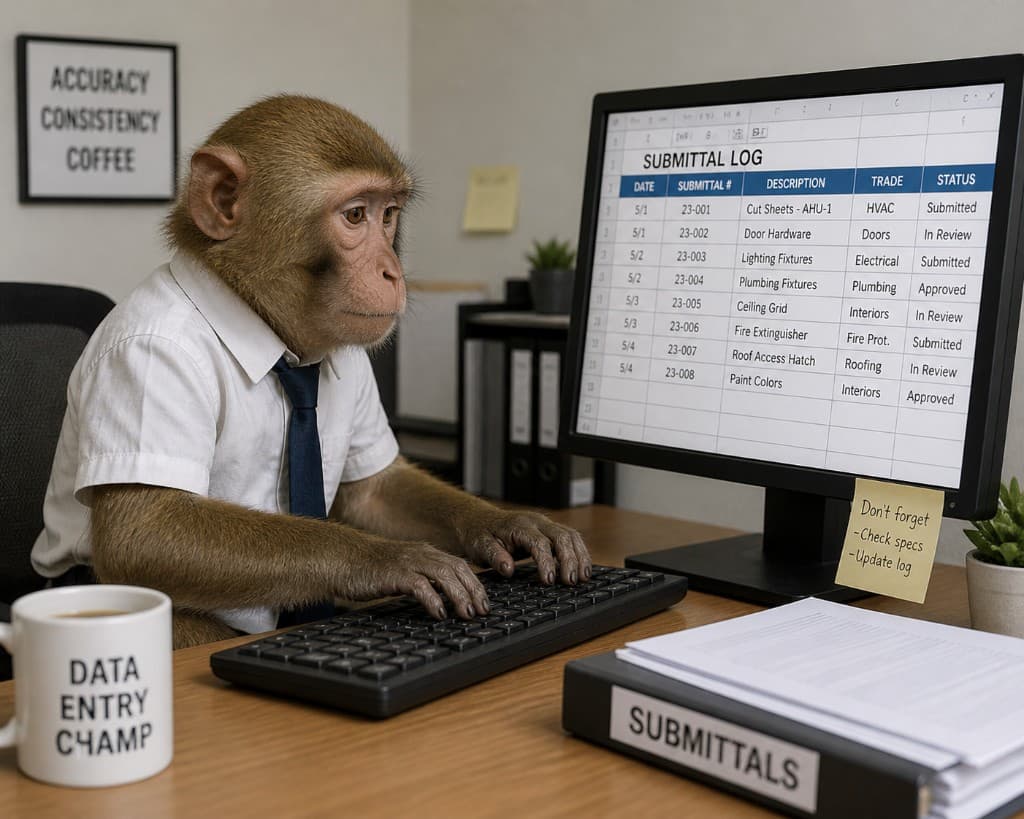
The Data You've Been Creating (But Never Keeping)
There's a layer of data sitting inside your bids, emails, and day-to-day communication that most contractors have never captured—response times, how quickly a GC actually engages after an ITB, how long it takes your team to turn around clarifications, how many back-and-forths happen before scope is understood.
It's not hidden. It just hasn't been worth chasing.
Nobody logs how long it took to send the first RFI. Nobody tracks which PM responds in 30 minutes versus three days. Nobody counts how often scope gaps surface late versus early. Not because those signals don't matter—but because stopping to record them mid-pursuit would slow the job down.
So they disappear.
What's left is a version of events that feels accurate. But it's missing most of what actually happened.
Every bid creates a trail:
- Time between ITB receipt and first internal review
- Lag between receiving documents and sending clarifications
- How often a GC responds—and how fast
- How many clarification cycles it takes to lock scope
- Which jobs had late-stage scope gaps versus early alignment
- Who internally touched the bid, and when
Individually, none of this feels worth tracking. Together, it's a pattern.
The problem was never awareness. It was the effort of capture. Logging this manually means someone has to stop mid-pursuit and record it. Nobody does. And when they try, it lasts two weeks before dying in a spreadsheet nobody trusts.
What Changed
AI can sit inside the workflow and collect this passively—connected to email, your CRM, bid folders, and proposal workflows:
Email timestamps become response-time metrics. File access and edits become engagement signals. Clarification threads become structured scope data. CRM updates become timeline checkpoints.
The work gets done the same way it always has. The difference is that the exhaust from that work gets captured—consistently, across every pursuit.
The Metrics Nobody Has
Once that data exists, new patterns become visible—ones most BD teams have never had access to:
Response latency. How long does your team take to respond versus the GC? More importantly—what does that look like on wins versus losses?
Clarification velocity. How quickly does scope converge? Fast convergence often signals alignment. Drawn-out, fragmented clarification cycles tend to appear on jobs that go sideways—or don't get awarded at all.
GC engagement profile. Not just whether they respond, but how. Short replies. Delayed responses. Detailed feedback. Patterns form across projects if you're watching.
First-mover advantage. How often are winning bidders among the first to engage? Not first to submit—but first to demonstrate they understand the job.
Internal handoff friction. How many times does a bid stall between BD, estimating, and operations? Where does time actually get lost inside your own team?
Scope stability. How much does scope shift between first review and final number? High volatility correlates with lower hit rates—and tighter margins.
From Chasing Work to Selecting It
Most BD teams say they're selective. But selection usually comes down to backlog pressure, relationships, and gut feel.
With this data, you start to see which GCs reward early engagement versus last-minute numbers, which ones consistently create clean bid environments, and which ones compress timelines and drag out clarifications. You also see how your team performs inside each of those environments.
Some GCs don't produce bad projects. They produce bad fits. With the right data, you can actually prove that—and act on it before the next bid cycle.
You pursue GCs where your engagement patterns align. You avoid projects where scope instability has historically killed margin. You staff pursuits based on who actually performs well with that GC. You adjust strategy before bid day, not after a loss debrief.
What Doesn't Change
You still decide what number to carry. You still decide what to qualify, what to push back on, and when to walk away.
The model doesn't know when a relationship is worth leaning into. It doesn't catch the hesitation in a PM's voice before he answers a question.
But it does remove something that's been limiting BD teams quietly for years: the inability to see what's actually happening, consistently, across every pursuit.
Most contractors aren't losing bids because they're making bad decisions. They're losing because they're making decisions on an incomplete picture.